Ho Tzu Nyen: Hotel Aporia
-
ExhibitionMuseo Amparo
-
DATES:
March 4 - April 27 This exhibition will extend beyond the dates of TONO Festival 2026
Venue:
Museo Amparo
Time: Museum Hours
Admission: Museum Admission
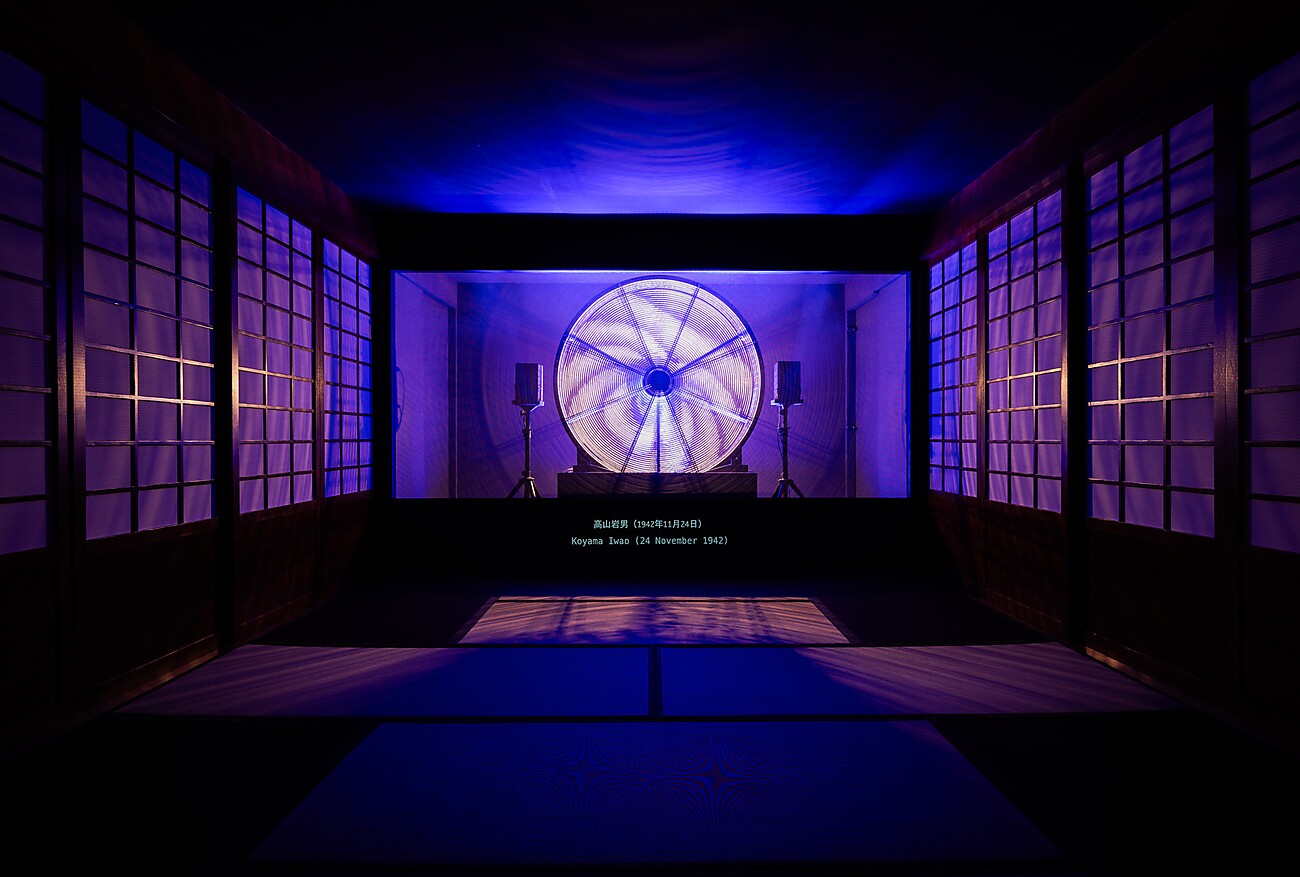
Singaporean artist Ho Tzu Nyen’s multichannel video-installation Hotel Aporia (2019) transforms a series of galleries at the Museo Amparo into a ryokan or Japanese Inn. Filling the fictitious World War II “Hotel Aporia” with conversations from figures across time–the inn-keeper at the Kiraku-Tei where the project was first staged, World War II kamikaze pilots, philosophers of the Kyoto School, the late filmmakers Ryuichi Yokoyama and Yasujiro Ozu, and the artist and his team of collaborators, Ho brings together a multiplicity of voices to explore a historical moment in Japanese history when nationalism and cultural production intersected to serve imperial interests. In threading historic characters with contemporary figures, Ho offers a perspective on history that is always present in an ever-evolving process of recycling and transformation.
Ho first imagined this work for the 2019 Aichi Triennale as a site-specific response to a traditional inn that was built in Toyota City, Aichi Prefecture, during the Taisho period. While it was frequented by those in the silk business before World War II and by Toyota’s automobile industry afterward, it hosted the last banquet for the Kusanagi Unit, a squadron of kamikaze pilots from the Nagoya Navy Air Corps, before their fatal mission to Okinawa. Following the war, their families gathered at the inn for a final celebration of mourning. The installation brings together images from documentary films of that period, as well as scenes from Ozu and Yokoyama. As part of propaganda missions, Ozu was drafted into the Japanese Imperial Army and sent to Singapore to make films, while Yokoyama was sent to Indonesia. While Ozu never finished his film and scenes from his 1949 work Late Spring are included here, Yokoyama created Fuku-chan’s Submarine (1944), in which the character Fuku-chan, who appears in the installation, is sent to war on a submarine.
In addition to stitching these visual sources together, Ho obfuscates the characters’ faces and blows artificial wind throughout the galleries, creating a historical collage and a sensation of whirring through time. It becomes easier to imagine characters throughout history and even contemporary faces filling the frames–an artistic move which collapses the past and the present into one. While Ho presents catastrophic moments in a specific imperial history, he does not allow us to leave the history in the past; he illuminates how the present is entangled with these traces. As we walk further into the work and traverse the four chapters–“The Waves,” “The Wind,” “The Void,” and “The Children”–we also learn about the East Asian perspective on emptiness not as a lack but rather as pure possibility.